Air Quality Monitors Show Home's Real Problems
Your Air Is Making You Sick: 3 Air Quality Monitors That Show You What’s Really in Your Home Do you ever wake up feeling groggy, have persistent coughs or feel unusually fatigued? While these symptoms could be due to various reasons, one often overlooked factor is the air quality in your home. Poor indoor air can lead to a myriad of health issues ranging from headaches and allergies to more severe conditions like asthma and respiratory infections.

Your Air Is Making You Sick: 3 Air Quality Monitors That Show You What’s Really in Your Home


Do you ever wake up feeling groggy, have persistent coughs or feel unusually fatigued? While these symptoms could be due to various reasons, one often overlooked factor is the air quality in your home. Poor indoor air can lead to a myriad of health issues ranging from headaches and allergies to more severe conditions like asthma and respiratory infections.
The Problem: What’s Really in Your Home Air?
The air inside your home isn’t as pristine as you might think. Dust, pollen, mold spores, volatile organic compounds (VOCs), carbon dioxide, and even formaldehyde can all be present. Without proper monitoring, these pollutants can build up to levels that affect your health.
Why Does It Matter?
Long-term exposure to poor air quality can lead to chronic respiratory issues, heart disease, and even cancer. Short-term exposure can cause immediate discomfort such as eye irritation, coughing, and dizziness. For those with asthma or other pre-existing conditions, the impact can be more severe.
The Solution: Air Quality Monitors for Your Home
To keep your indoor air clean and healthy, investing in an air quality monitor is essential. Here are three top options that can help you understand and improve the air quality in your home:
1. Airthings Wave Plus
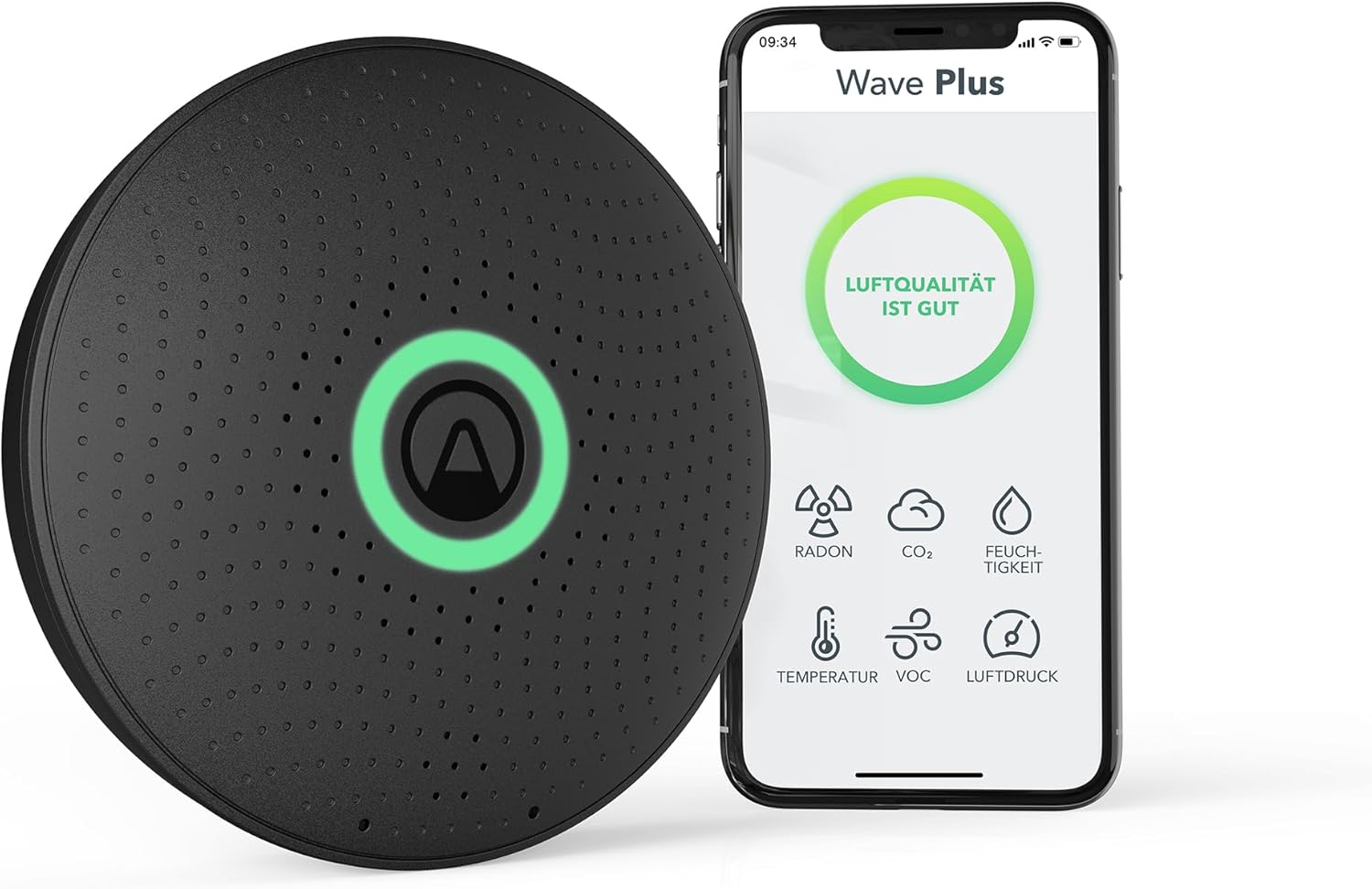
The Airthings Wave Plus (Search+Terms) is a powerful air quality monitor that measures humidity, temperature, radon, CO2, and VOCs. It provides real-time data through its app, making it easy to track and understand the quality of your home’s air.
Key Features:
- Advanced Sensors: Measures radon, CO2, temperature, and humidity.
- VOC Detection: Detects volatile organic compounds that can affect your health.
- Long Battery Life: Up to 24 months on a single battery change.
- Easy Setup: Connects quickly to Wi-Fi for real-time data.
Pros:
- Comprehensive monitoring of multiple pollutants.
- User-friendly interface and app.
- Reliable and accurate readings.
Cons:
- Slightly higher price point compared to other options.
- Requires occasional calibration.
2. Awair Element
The Awair Element (Search+Terms) is designed to be a central air quality hub for your home, offering a wide range of sensors to monitor multiple pollutants and conditions.
Key Features:
- Multi-Sensor Hub: Monitors temperature, humidity, CO2, VOCs, PM 1.0/PM 2.5 particulates.
- Smart Alerts: Sends notifications when air quality drops below healthy levels.
- Interactive Dashboard: Provides detailed insights into your home’s environment.
- Eco-Friendly Design: Uses energy-efficient technology.
Pros:
- Comprehensive data dashboard for better health tracking.
- Eco-friendly and energy-efficient design.
- Affordable compared to other advanced models.
Cons:
- May not be as robust in detecting specific pollutants like radon.
- App interface can be a bit cluttered at times.
3. Govee Air Quality Monitor H5106
The Govee Air Quality Monitor H5106 (Search+Terms) is a cost-effective option that still offers reliable air quality monitoring for your home.
Key Features:
- Basic Monitoring: Tracks temperature, humidity, CO2, and particulate matter.
- Colorful Display: Provides clear visual feedback on air quality.
- User-Friendly: Easy to set up and use.
- Budget-Friendly: Affordable price point without sacrificing core functionality.
Pros:
- Budget-friendly for those looking for basic monitoring.
- Simple and easy-to-use interface.
- Good for general air quality awareness.
Cons:
- Limited in the range of pollutants it measures.
- No app support, making data analysis less convenient.
The Verdict
Each of these monitors has its strengths and is suitable depending on your specific needs. If you are looking for comprehensive monitoring including radon levels, the Airthings Wave Plus stands out. For a more affordable option with a broad range of sensors, the Awair Element is highly recommended. Lastly, if budget is a concern but you still want reliable basic monitoring, the Govee Air Quality Monitor H5106 is an strong pick.
By choosing one of these air quality monitors, you can take proactive steps to improve your indoor environment and safeguard your health. Start by identifying which features are most important for you-whether it’s comprehensive pollutant detection or a budget-friendly solution-and make the best decision for your home.
Frequently Asked Questions
Q: What pollutants do these air quality monitors actually track? A: These monitors primarily track particulate matter (PM2.5 and PM10), volatile organic compounds (VOCs), carbon dioxide (CO2), temperature, and humidity. The specific sensors vary slightly by model, but all three provide a solid baseline picture of common indoor air contaminants.
Q: Is an air quality monitor enough to fix air quality problems? A: No – monitors identify problems, they do not solve them. Once you know what is elevated, you still need to address the source: improving ventilation, running an air purifier, reducing chemical off-gassing, or fixing moisture issues that cause mold.
Q: How accurate are these readings compared to professional equipment? A: Consumer monitors are accurate enough to detect meaningful trends and significant spikes, but they are not calibrated to the same standard as industrial or laboratory equipment. Use them to spot patterns and trigger action, not as definitive measurements.
Q: Is Wi-Fi required for these monitors to work? A: Yes, the Airthings Wave Plus, Awair Element, and IQAir AirVisual Pro all require Wi-Fi to sync data to their apps and enable remote monitoring. Basic readings are often shown on the device display without a connection, but full functionality depends on a live Wi-Fi link.
Also on Cydon Says
- Switching from Philips Hue to Matter-Compatible Smart Lighting
- Ecobee Smart Thermostat Premium Review: Is It Worth $250 in 2026
Related Posts:
- Top 5 Best Home Energy Monitors for 2026 - A Head-to-Head Comparison
- Home Energy Monitors at $30, $150, and $350: What Each Tier Shows You
- Emporia Vue 3 vs Refoss X7: Best Whole-Home Energy Monitors for 2026
- Best Smart Home Entertainment Devices Under $250 in 2026: TP-Link Kasa vs Amazon Echo Show